
Impact from tax dialogue, seafood product exports are being rewritten
It is forecasted that in the fourth quarter of 2025, Vietnam’s seafood exports will slow down sharply due to the impact of the 20% reciprocal tax and the risk of imposing high anti-dumping tax on shrimp imported into the US.
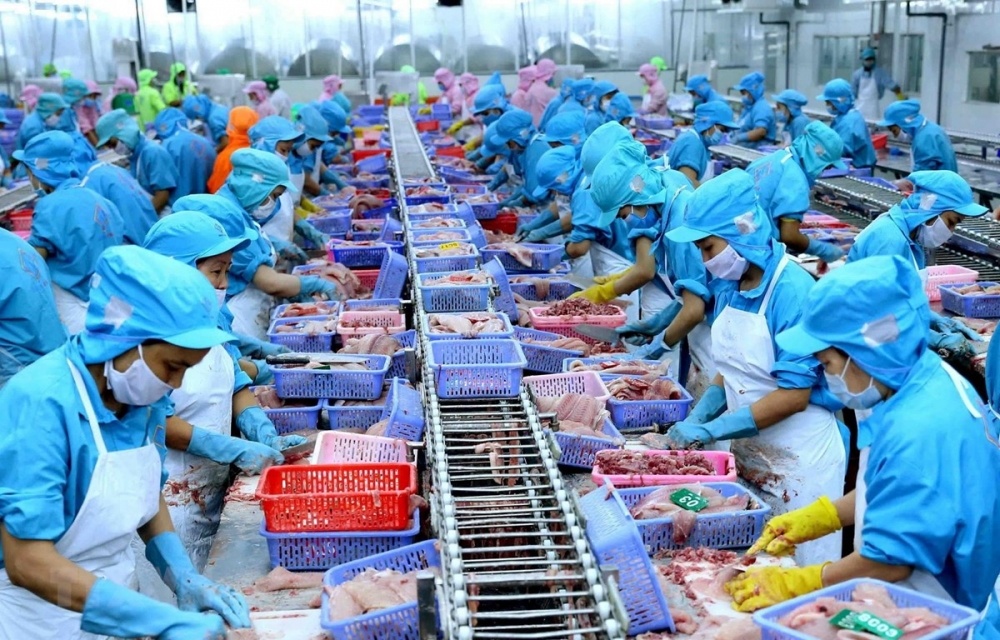
According to Ms. Le Hang, Deputy Secretary General of the Vietnam Association of Seafood Exporters and Producers (VASEP), at the end of the third quarter of 2025, Vietnam’s seafood export turnover reached 2.7 billion USD, up 10% over the same period last year, but lower than the first two quarters. The cumulative 9-month figure reached 8.36 billion USD, up 16%, showing that the industry has maintained positive growth momentum despite many pressures.
According to Ms. Le Hang, the slight decline in the third quarter reflects the clear impact of the US’s 20% reciprocal tax policy that began to be applied in August, forcing many businesses to adjust their delivery plans and seek market orientation.
In the product structure, shrimp continues to be the main item with a turnover of 3.4 billion USD, up 22%, the highest level in the past three years. Pangasius reached 1.6 billion USD, up 9%, holding the second position thanks to the recovery in CPTPP and Middle East markets. Squid, octopus, shellfish and crab all recorded double-digit growth, while tuna decreased slightly due to raw material shortages and conflicts in the Middle East affecting the supply chain.
By market, China and Hong Kong continued to be the largest importing regions with 1.8 billion USD, up 34%, while the US reached 1.4 billion USD, up 8.4% but started to slow down in the third quarter. Exports to Japan reached 1.3 billion USD, up 17% and the EU 884 million USD, up 13%, while Korea, ASEAN and the Middle East maintained double-digit growth.
Notably, CPTPP continued to be an impressive growth region, up 25%, showing the effectiveness of leveraging free trade agreements in diversifying markets.
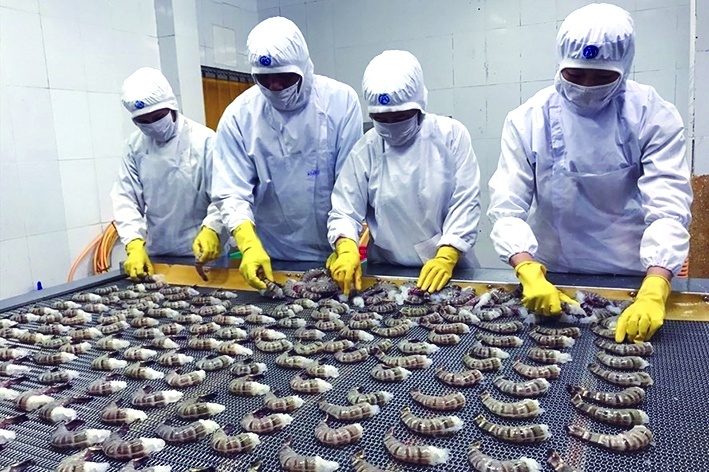
However, the picture in the third quarter also revealed many challenges. New reciprocal tariffs from the US, along with stricter regulations on traceability and marine mammal protection (MMPA), are becoming the biggest challenge for export activities in the fourth quarter and 2026.
At the same time, the EU’s IUU yellow card has not been removed, making it difficult for exploited seafood groups to access high-end markets. In addition, exchange rate fluctuations, increased logistics costs, and competition from rivals such as India, Ecuador, and Indonesia are putting great pressure on the profits of Vietnamese enterprises.
However, according to Ms. Hang, there are still many strategic opportunities in the midst of difficulties. The EU has moved to loosen some technical barriers to Vietnamese farmed seafood, opening up strong growth space for shrimp and pangasius. The CPTPP, expanded with the UK’s accession, helps diversify trade channels and create more opportunities for high-end processed products.
The Chinese market still maintains a large demand for fresh and high-end products to serve restaurants and hotels, especially in the last months of the year.
Based on the above reality, VASEP forecasts that in the fourth quarter of 2025, Vietnam’s seafood exports will slow down sharply, reaching about 2.19 billion USD, down more than 22% compared to the same period, due to the impact of the 20% reciprocal tax and the risk of imposing high anti-dumping tax on shrimp imported into the US.
Of which, shrimp and pangasius – two key products – are expected to slow down, while tuna, squid and octopus will fall sharply due to the impact of the IUU yellow card and concerns about the MMPA regulation taking effect from early 2026. On the contrary, the EU and China still maintain stable demand, which is the main support to help the total turnover in 2025 reach an estimated 10.5 billion USD, an increase of about 5% compared to 2024.
Not only that, the export situation in the first quarter of 2026 is forecast to continue to decrease, due to the chain effect of taxes and MMPA. From the second quarter of 2026 onwards, the recovery speed will depend on Vietnam’s ability to remove tax barriers, IUU, along with market diversification and increasing the proportion of high-value processed goods.
Source: Haiquanonline