
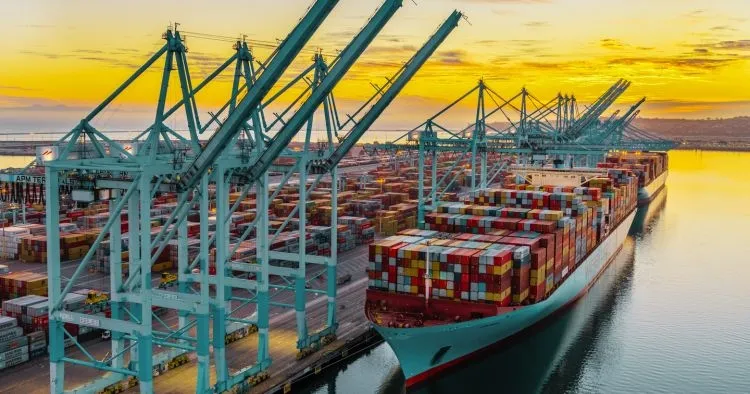

Vietnamese agricultural products open wide to the Japanese market
The demand for Vietnamese agricultural products in Japan is increasing rapidly, opening up great opportunities for Vietnamese enterprises in the context of this market increasingly prioritizing high-quality products with clear origin. However, strict requirements on standards are still a big challenge.
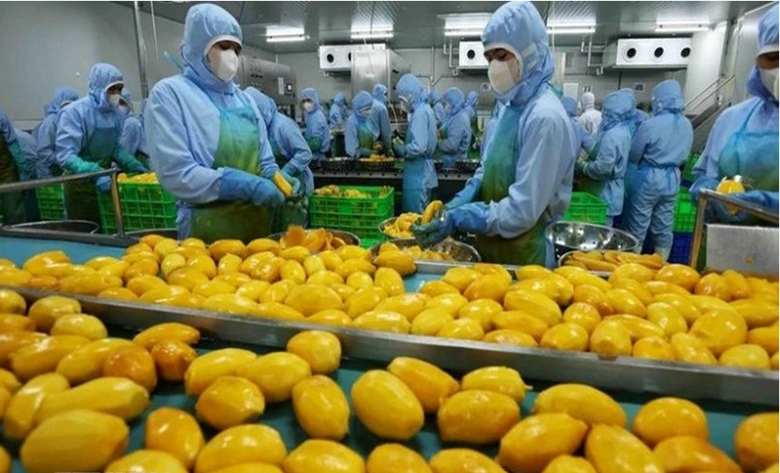
Increasing demand, Vietnamese agricultural products are increasingly present
In recent years, the Japanese market has recorded a clear increase in the consumption of Vietnamese agricultural products, especially in two main groups of products: vegetables and fruits. According to Ms. Pham Thi Minh Ha, representative of the Vietnam Trade Office in Japan: Vietnamese agricultural products in general are increasingly penetrating the retail and consumption system in Japan. In particular, seafood – especially shrimp, tra fish, basa fish… have appeared regularly on many shelves in major cities of Japan.
In addition, a series of other products such as coffee, processed vegetables, mango, lychee, longan, and specialty rice such as ST25 and Japonica continue to be favored by Japanese consumers thanks to their natural flavors and improved quality standards over the years.
In particular, more than 600,000 Vietnamese people living and working in Japan have become a significant group of Vietnamese consumers, and are also an important bridge to promote the habit of using Vietnamese products in the local community.
In Hanoi, according to Ms. Nguyen Thi Thu Hang, Head of the Department of Quality, Processing and Market Development (Hanoi Department of Agriculture and Environment), dozens of enterprises in the capital are exporting agricultural products to Japan.
With advantages in logistics and the ability to purchase and process agricultural products from many provinces and cities, Hanoi enterprises have become an important hub to bring vegetables, fruits, tea, rice and many specialty products to this demanding market. Hanoi’s agricultural export value has recorded a continuous increase in recent years, reflecting the great demand from Japan.
It is impossible not to mention the AEON system – Japan’s leading retail group has developed 14 AEON Mall supermarkets and 300 stores across Vietnam. Mr. Nakajima Hideo, Director of the Food and Health – Beauty Products Department of AEON Japan, said: the company expects to double the demand for purchasing Vietnamese agricultural products by 2026, in which frozen vegetables and fruits are two priority product groups.
Strict standards, requiring innovation from Vietnamese businesses
Despite the wide open opportunities, the Japanese market is still famous for being difficult and only accepts products that meet high standards of quality, safety, origin and environment. Mr. Nakajima Hideo emphasized: in order for Vietnamese agricultural products to enter the AEON system in Japan, businesses need to strictly meet quality conditions, especially the GlobalGAP certificate, which is a “passport” to help increase the level of trust.
Ms. Pham Thi Minh Ha said: Japanese people are willing to pay high prices for clean, certified products with clear traceability. Organic, green – environmentally friendly product lines are also increasingly prioritized, in line with new consumption trends in this country.
Therefore, Vietnamese businesses need to regularly update the input quality control regulations of Japanese authorities; at the same time, invest more in post-harvest preservation technology to maintain stable quality throughout the export chain.
From a management perspective, Mr. Ta Van Tuong, Deputy Director of the Hanoi Department of Agriculture and Environment, affirmed: Although the capital is not a large specialized area, the production scale and quality of Hanoi’s agricultural products have been continuously improved, capable of meeting the requirements of high-end markets.
Mr. Tuong also emphasized that the policies to support small and medium-sized enterprises are being strongly implemented by the Party and the State, creating momentum for businesses to reach out to international markets.
To take advantage of the opportunity, Mr. Dang Van Vinh, Deputy Head of the Market Development Department (Department of Quality, Processing and Market Development – Ministry of Agriculture and Environment), noted that businesses need to pay special attention to the list of restrictions and prohibitions, the issue of chemical residues, and Japanese plant quarantine regulations.
In addition, the regulations on labeling according to the instructions of JETRO or the Ministry of Agriculture and Environment must also be fully complied with to avoid risks during customs clearance.
The Japanese market always brings high value but also requires professionalism, method and perseverance. When Vietnamese enterprises invest in the right direction and build appropriate quality standards, the door to this potential billion-people market will open wider and wider, creating an important foundation for Vietnamese agricultural products to affirm their position on the global export map.
Source: Financial Economics Magazine