

Taking advantage of tax incentives from CPTPP to accelerate exports to the Americas
Effectively taking advantage of tariff incentives from the Comprehensive and Progressive Agreement for Trans-Pacific Partnership (CPTPP) is opening up a strong step forward for Vietnamese goods, especially in the American markets. Impressive growth figures show that Vietnamese enterprises are increasingly proactive, more confident and ready to conquer demanding markets with quality and a methodical strategy.
Accelerating the expansion of the CPTPP market
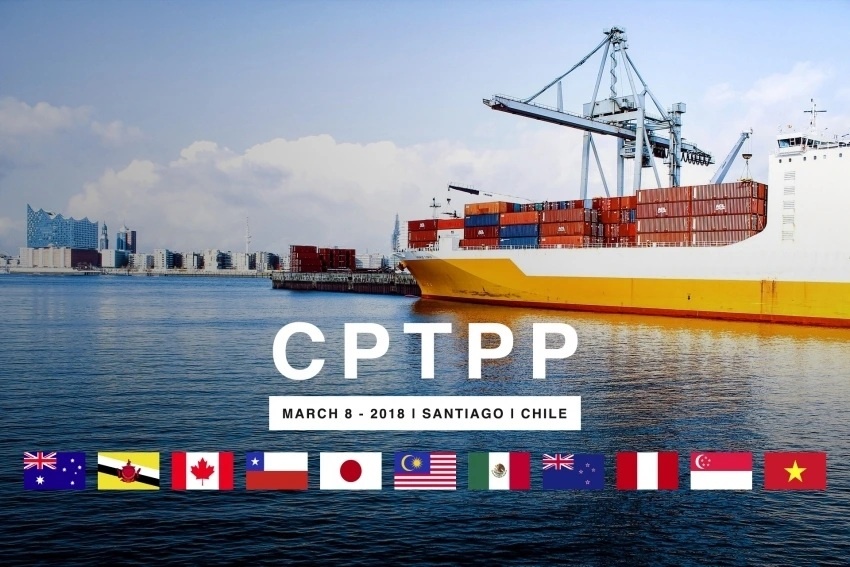
CPTPP – a new generation free trade agreement with high standards has created a large development space for Vietnamese exports since taking effect on January 14, 2019. With 12 member countries, a population of more than 500 million people and accounting for about 15% of global GDP, CPTPP is bringing practical benefits to domestic enterprises.
The latest figures continue to show the strong momentum of Vietnamese trade with the CPTPP bloc. In just 10 months of 2025, trade turnover reached 102.8 billion USD, up 20.6% over the same period. Of which, Vietnam’s exports reached 58.3 billion USD (up 26%) and imports reached 44.5 billion USD (up 14.47%). Previously, in 2024, bilateral trade turnover reached 102.1 billion USD, up 6.8% compared to 2023, affirming the sustainable growth trend.
One of the factors contributing to this result is that Vietnamese enterprises proactively meet the rules of origin and optimize tariff incentives. The proportion of exports granted CPTPP preferential C/O has continuously increased sharply: from 0.7 billion USD (2%) in 2019 to 5 billion USD (8.8%) in 2024. The electronics, telephone, seafood, wooden furniture industries… have built a solid position in many CPTPP markets thanks to improving quality, improving technology and meeting high standards.
In particular, American markets such as Canada, Mexico and Peru have become prominent bright spots. Import-export turnover between Vietnam and this market group increased by more than 56%. In Canada, the market share of Vietnamese goods increased from 7-8% to 10%; shrimp products grew spectacularly from 18% to 35%, maintaining the No. 1 position in this market. In Mexico, Vietnam is among the three largest pangasius export markets, continuing to maintain positive growth momentum.
Not only expanding market share, the rate of utilizing preferential C/O has also increased sharply. In Mexico, the proportion of exports with preferential C/O increased from 7% in 2015 to 47% in 2024; seafood and footwear alone reached more than 80%. In Canada, suitcases, handbags, rattan and bamboo products, and sedge mats accounted for 42-45%, while seafood accounted for approximately 80%. This shows that the capacity of Vietnamese enterprises to meet strict standards has improved significantly over the years.
According to the Ministry of Industry and Trade, the total import turnover of CPTPP countries currently reaches nearly 2,500 billion USD, opening up great room for Vietnamese goods to continue to accelerate, especially in markets such as Australia, Japan, Singapore and Canada.
Great opportunity when CPTPP continues to expand
Not only stopping at 12 members, CPTPP is facing a new expansion phase when 6 economies including China, Taiwan (China), Costa Rica, Ecuador, Uruguay and Ukraine expressed their desire to join. Adding more large markets, especially China, will create a deeper integration network, while opening up great opportunities for Vietnamese enterprises to attract investment, expand exports and strengthen value chain linkages.
Currently, Vietnam only exports about 42 billion USD to CPTPP members, accounting for 1.7% of the bloc’s total import value. This figure shows that the growth potential is still very large. Continuing to improve product quality, proactively meeting technical standards and investing more in technological innovation will help Vietnamese enterprises effectively exploit this potential market.
CPTPP not only expands trade opportunities but is also a measure of the competitiveness of Vietnamese enterprises in the context of deep integration. When tariff incentives are fully utilized, Vietnamese brands are enhanced and production capacity is improved, the door to entering demanding markets will be increasingly open.
Source: tapchikinhtetaichinh