

Durian leads growth, expands exports
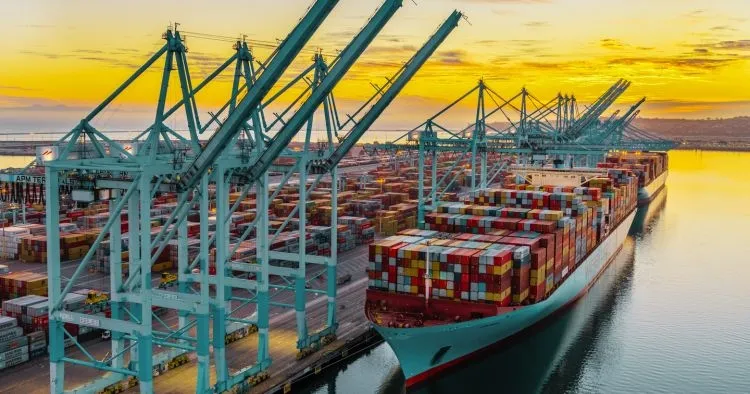
Vietnam’s fruit and vegetable exports are accelerating strongly, with the turnover in the first 10 months of 2025 reaching 7.09 billion USD, up 15.1% over the same period in 2024 and approaching the 7.12 billion USD level for the whole year of 2024. This trend is creating a solid foundation for the industry to reach the 8.5 billion USD mark in 2025 – the highest growth rate ever.
Durian continues to be the star leading growth
According to the Ministry of Agriculture and Environment, in October 2025 alone, the export turnover of fruits and vegetables reached 961 million USD, lower than September 2025 (1.313 billion USD) but still much higher than October 2024 (519 million USD).
In 10 months, China continued to be the dominant market with a proportion of 62.9% of the total export turnover of Vietnamese fruits and vegetables; followed by the United States at 6.6% and South Korea at 3.9%. Among the 15 largest export markets, Malaysia grew the most, reaching 70.2%; while Thailand saw the deepest decline, at 55.6%.
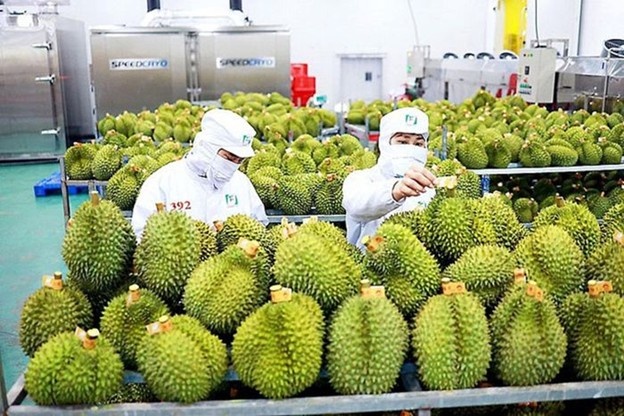
Strategic fruit groups continue to be the main driving force, including durian, mango, jackfruit, banana, grapefruit, and coconut. In particular, durian affirms its position as the “star of the industry” when maintaining its role as a key commodity, continuing to lead growth. By the end of October 2025, durian exports had surpassed the record of 3.2 billion USD for the whole year of 2024. Compared to the same period last year, durian export turnover increased by 12.3% compared to 2.85 billion USD in 10 months of 2024.
In particular, the first half of 2025, although there were times of stagnation due to new regulations from China on testing requirements for yellow O and Cadmium. However, after overcoming this obstacle from July 2025, durian exports accelerated strongly, reaching 1.94 billion USD in the third quarter alone, up 30.3% over the same period. There was a slight decrease in October, but that was due to the peak harvest season having passed, output decreasing seasonally – not due to demand factors.
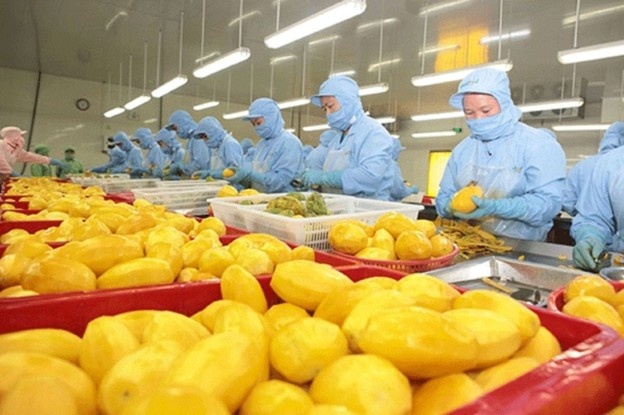
Another notable bright spot is that lychee in the first 3 quarters of the year reached 73 million USD, up 312.1% over the same period. In addition to fresh fruits and vegetables, the processed product group also accelerated strongly. In the third quarter of 2025, the export value of processed fruits and vegetables reached 507 million USD, up 47.4% and accounting for 16.6% of total export turnover.
Expanding the market, proactively applying new standards
Mr. Nguyen Thanh Binh, Chairman of the Vietnam Fruit and Vegetable Association (VinaFruit), said that businesses have promoted the application of high technology, transparent traceability, growing area codes, packaging facility codes, and meeting the conditions available in international trade.
This helps Vietnamese fruits and vegetables penetrate deeper into demanding markets such as the US, Japan, Canada, and Australia. The fact that Vietnamese grapefruit has been officially approved for import by Australia is considered an important milestone, demonstrating the ability to comply with standards, and is a “quality effect” for many other fruits.
From August 2025 to now, the export turnover of fruits and vegetables has remained stable at over 900 million USD/month. If this speed is maintained in the remaining months of the year, the target of 8.5 billion USD in 2025 can be completely set.
The project to develop key fruit trees sets a target of 5 billion USD by 2025; 6.5 billion USD by 2030. With the current reality, the fruit and vegetable industry has far exceeded the target set by the 2030 Strategy, opening up prospects to reach the 10 billion USD mark in just 1-2 years.
It can be seen that the standardization of raw material areas according to VietGAP and GlobalGAP standards continues to be a key factor. From June 1, 2026, Decree 280 of China officially applies a risk-based management mechanism, prioritizes customs clearance and automatically renews the 5-year registration code if the enterprise does not violate.
This is both a test of quality control capacity and a golden opportunity for Vietnamese enterprises to establish a new position on the world fruit and vegetable export map – from increasing quantity to increasing quality, from orders to national brands.
Source: tapchikinhtetaichinh